A zirconia crown and bridge manufacturer produces all-ceramic dental restorations by milling zirconia blanks with CAD/CAM equipment. Zirconia is valued for its strength and tooth-like appearance, which makes it a frequent choice for both posterior and anterior crowns and bridges. For clinics and distributors comparing suppliers, the practical questions are material grade, manufacturing process, fit consistency, and sample verification. This article explains how zirconia crowns are produced, the difference between monolithic and multilayer options, and the points worth checking before placing an order with a manufacturer.
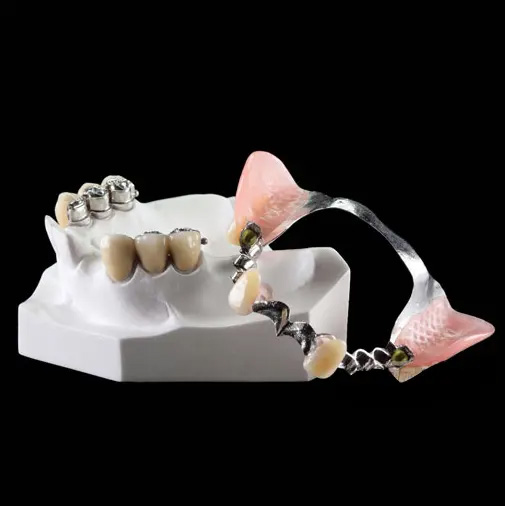
What Zirconia Crowns and Bridges Are
Zirconia (yttria-stabilized zirconium dioxide) is a ceramic used in dentistry for fixed restorations. A zirconia crown covers a prepared tooth; a zirconia bridge spans one or more missing teeth using adjacent teeth or implants as support. Compared with metal-based options, all-ceramic zirconia avoids a dark margin at the gum line and is generally well tolerated by patients.
How a Zirconia Crown and Bridge Manufacturer Works
A typical digital workflow follows five steps:
Scan or impression – intraoral (IOS) scan files (STL and similar formats) or a conventional impression.
CAD design – a technician designs the crown or bridge, setting the margin, occlusion, and contact points.
Milling – a milling machine cuts the restoration from a zirconia blank.
Sintering – the milled piece is sintered, which causes predictable shrinkage that the design stage compensates for.
Staining and glazing – for layered or anterior cases, shading is applied to match neighboring teeth.
A manufacturer using this digital chain can reproduce cases from scan data without physical models shipped across borders, which shortens the loop between a clinic's scan and the returned restoration.
Monolithic vs Multilayer Zirconia
The suitable choice depends on tooth position and the clinic's esthetic standard, rather than on a single option that fits every case.
Why Clinics Source from a Zirconia Manufacturer
These are operational factors; the right mix depends on each clinic's case load and quality bar.
How to Evaluate a Zirconia Crown and Bridge Manufacturer
Before committing, request clear answers on the following:
Material grade and brand – ask which zirconia blanks are used and their translucency and strength rating.
Sintering and shrinkage control – confirm the lab compensates for sintering shrinkage in the design file.
Fit and tolerance – request marginal-fit expectations and a sample to verify them.
Shade matching – check how anterior cases are shaded (external stain versus multilayer blank).
Certifications – verify ISO 13485 quality management and, for the target market, CE marking or FDA establishment registration where applicable.
Sample policy – confirm a zirconia crown sample is available before a bulk run.
Communication – confirm scan-file transfer, case support language, and revision handling.
Sample Orders and Quality Checks
A zirconia crown sample order lets a clinic test one unit for margin fit, shade, and milling quality before committing to volume. Foo Tian's existing notes on zirconia block samples and its zirconia crown sample service describe how sample testing is set up and what to look for.
Foo Tian Dental Lab as a Working Example
Foo Tian Dental Lab, operated by Shenzhen Futianwo Technology Co., Ltd. in Shenzhen, China, lists zirconia crowns and bridges among its core products. The lab states it accepts IOS digital scan files and offers sample orders, which fits the workflow described above. Clinics reviewing a zirconia crown and bridge manufacturer can also read the company's about page and its guide on reliable crown outsourcing.
FAQ
What is the difference between monolithic and multilayer zirconia?Monolithic zirconia is milled from one block and leans toward strength; multilayer zirconia has graduated translucency for a more natural look in visible areas. The choice follows tooth position and esthetic need.
Can a zirconia manufacturer accept digital scans?Most established manufacturers accept IOS files (STL and similar), so a clinic can send scans instead of mailing physical impressions.
How do I check quality before a bulk order?Request a single sample unit and verify marginal fit, shade, and milling consistency on a printed model before scaling up.
Which certifications should I verify?Ask for ISO 13485 (quality management) and, depending on destination, CE or FDA establishment registration. Confirm the current certificate rather than relying on a homepage claim.
Are zirconia bridges strong enough for molars?Zirconia is used for posterior bridges, but the right result depends on span length, support, and occlusal design, which a manufacturer should discuss per case.
Conclusion
Selecting a zirconia crown and bridge manufacturer is less about slogans and more about process: material grade, CAD/CAM control, sample verification, and documented quality. Foo Tian Dental Lab shows a workable model – zirconia crowns and bridges with IOS file support and sample orders. To check fit and shade before volume, review the zirconia sample service or the sample customization guide.